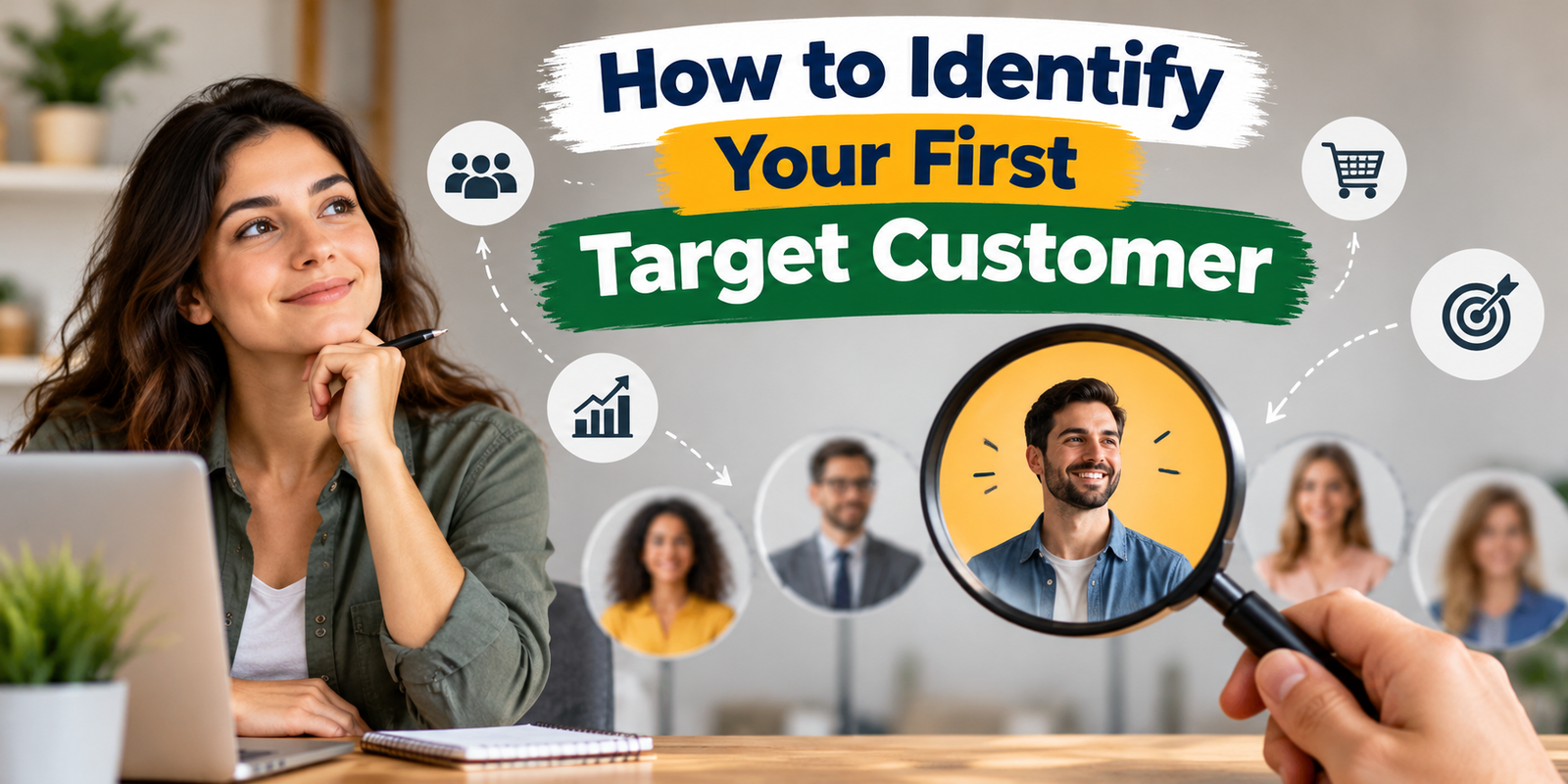
Starting a small business often begins with an idea. You may have a product you want to sell, a service you can provide, or a solution that you believe can help people. However, having a good idea is only one part of building a successful business. You also need to understand who is most likely to buy from you.
This is where identifying your first target customer becomes important.
A target customer is the type of person who is most likely to need your product or service, understand its value, and be willing to pay for it. When you know who this person is, marketing becomes easier. You can communicate more clearly, choose better advertising channels, improve your product, and avoid wasting money trying to reach everyone.
Many new business owners make the mistake of saying that their product is for everyone. In reality, very few products are truly designed for everyone. Even large companies usually focus on specific groups of customers.
Finding your first target customer does not mean that you can never sell to anyone else. It simply gives your business a clear starting point.
Start With the Problem You Are Solving
The easiest way to identify a target customer is to begin with the problem your business solves.
Every useful product or service usually exists because someone has a need, frustration, desire, or difficulty.
For example, imagine you want to start a home cleaning service. Your service solves the problem of people not having enough time, energy, or interest to clean their homes regularly.
Now ask yourself who experiences this problem most often.
A busy professional working long hours may need your service more than someone who stays at home and enjoys cleaning.
A family with small children may need regular cleaning because keeping the house organized takes more effort.
An elderly person may need help because some cleaning tasks are physically difficult.
All of these people could become customers, but one group may be easier to reach and more likely to pay for the service.
Understanding the problem helps you move from a broad market toward a more specific customer.
Look at the People Who Need the Solution Most
Once you understand the problem, think about who feels it most strongly.
People usually spend money when a problem is important enough to them.
Suppose you want to sell affordable meal preparation services. Many people want convenient food, but some customers may value the service more than others.
Busy office workers may want prepared meals because they have little time to cook.
University students may like the convenience but may have limited budgets.
Fitness focused customers may pay more for meals designed around calories and protein.
Parents may appreciate family meal packages that save time in the evening.
Each group has different needs.
Your first target customer should normally be someone who has a clear problem that your business can solve effectively.
Study Your Product From the Customer’s Point of View
Business owners sometimes become too focused on their own product.
They think about features, design, ingredients, technology, pricing, or production. Customers often think differently.
Customers usually ask simple questions.
How will this help me?
Will it save me time?
Will it save me money?
Will it make something easier?
Will it solve a problem?
Will it improve my life?
Try to view your business through the customer’s eyes.
For example, imagine you are selling an online accounting service for small businesses.
You may think that the main benefit is advanced accounting software.
The customer may simply want an easier way to organize expenses and understand how much money the business is making.
Understanding this difference can help you identify the people who will appreciate your offer most.
Create a Simple Customer Profile
You do not need complicated market research software to create your first customer profile.
A simple description can be enough.
Think about characteristics that are actually relevant to your business.
These may include age, occupation, income range, location, interests, lifestyle, buying habits, and common problems.
For example, the first target customer for a social media management service could be described as:
A small business owner between 25 and 45 years old who runs a local shop or service business, understands that social media is important, but does not have enough time to create regular content.
This description is much more useful than simply saying, “My customers are business owners.”
The more clearly you understand the customer, the easier it becomes to create a suitable offer.
Avoid Making the Target Market Too Broad
A common mistake among beginners is choosing a very large customer group.
For example, saying your target market is “women between 18 and 60” is usually too broad.
A university student who is 20 years old may have completely different needs from a 50 year old business owner.
Their income, priorities, responsibilities, and buying decisions can be different.
A smaller target market often makes marketing easier.
Instead of selling fitness coaching to everyone who wants to exercise, you could initially focus on busy office workers who want short home workouts.
Instead of offering graphic design to every type of company, you could focus on local restaurants that need social media graphics and menus.
You can always expand later.
Starting with a smaller audience helps you understand customers faster.
Talk to Real People
One of the best ways to understand customers is to speak directly with them.
You do not need to conduct a large formal survey.
Start with people who appear similar to your potential customers.
Ask about their problems, current solutions, frustrations, priorities, and purchasing habits.
Avoid asking only whether they like your business idea.
People may say an idea sounds good simply because they want to be polite.
Instead, ask questions about their actual behavior.
You might ask:
How are you currently solving this problem?
How often does this problem happen?
What is the most difficult part?
Have you paid for a solution before?
What would make the solution more useful?
The answers can reveal valuable information.
You may discover that the problem you thought was important is actually minor, while another problem matters much more.
Study Existing Customers in the Market
Even if your business is new, similar businesses may already exist.
Their customers can teach you a lot about the market.
Look at companies offering products or services similar to yours.
Visit their websites and social media pages. Read customer comments and reviews. Notice the questions people ask.
Pay attention to what customers like and what they complain about.
For example, customers may complain that a competitor is expensive, difficult to contact, slow to deliver, or confusing to use.
These complaints can reveal opportunities.
You may be able to attract a specific group of customers by offering a simpler, faster, cheaper, or more specialized solution.
The goal is not to copy competitors. The goal is to understand the people already buying similar solutions.
Understand Where Your Customers Spend Time
Knowing who your target customer is also means knowing where you can reach them.
Different groups spend time in different places.
Some customers may use Facebook regularly. Others may spend more time on Instagram, TikTok, LinkedIn, YouTube, online forums, local communities, or search engines.
Your marketing channel should match your customer.
For example, if you offer professional consulting services to business managers, LinkedIn may be useful.
If you sell visually attractive home decoration products, Instagram or Pinterest may be more suitable.
If customers actively search for a solution when they need it, Google search traffic can be valuable.
You do not need to be active on every platform.
Being visible in one or two places where your ideal customers already spend time can be more effective.
Consider the Customer’s Ability to Pay
A person may need your product but still not be a suitable first customer if the price is difficult for them to afford.
This is especially important when starting a business.
Your first customer group should ideally have both a need and the ability to pay for your solution.
Imagine you provide website development services.
Students starting small personal projects may need websites, but their budgets may be limited.
Established local businesses may have more money available because a website can directly support their business.
Both groups may need the service, but the second group might be a more practical starting market.
This does not mean you should always target wealthy customers. It simply means your pricing should match the financial situation of the people you want to serve.
Identify the Buying Trigger
A buying trigger is an event or situation that makes someone more likely to purchase.
Understanding these moments can help you identify valuable customers.
For example, people may hire a photographer when they are getting married.
Businesses may need branding services when launching a new company.
Homeowners may hire painters when renovating.
Parents may buy educational products when children begin school.
A business may purchase cybersecurity services after experiencing security problems.
Think about what normally happens before someone needs your product.
These situations can help you find customers at the right time.
Test Your Target Customer With a Small Offer
You do not need to spend months studying the market before selling.
Sometimes the best research comes from offering something to real customers.
Create a simple version of your product or service and show it to a small group.
Observe who shows interest.
Notice who asks questions.
Pay attention to who is willing to pay.
Real purchasing behavior provides stronger information than opinions.
For example, you may believe that your handmade office organizers will mainly attract students.
After testing the product online, you may discover that home based professionals are actually more interested.
Your target customer can change as you learn more.
That is normal.
Look for Patterns
After speaking with potential customers and testing your offer, start looking for patterns.
Maybe most interested customers have similar jobs.
Maybe they live in similar areas.
Maybe they share the same problem.
Maybe they discover your business through the same platform.
Maybe they care about one benefit more than everything else.
These patterns help you understand who your strongest customer group may be.
You do not need thousands of customers to notice useful trends.
Even conversations with ten or twenty people can reveal valuable information when you are starting.
Understand the Difference Between User and Buyer
Sometimes the person using a product is not the person paying for it.
This is an important distinction.
For example, children use many educational products, but parents usually buy them.
Employees may use business software, but managers or business owners may approve the purchase.
Patients may use medical services, but insurance providers or family members may sometimes influence the financial decision.
When identifying your target customer, think about both the user and the buyer.
Your marketing may need to communicate with the person who controls the purchasing decision.
Create a Basic Customer Persona
After collecting information, create a simple fictional customer persona.
A persona represents the type of person you want to attract.
For example:
Ali is a 34 year old small business owner. He runs a local furniture shop and spends most of his day managing customers and employees. He wants to promote his business online but does not have enough time to create social media content. He wants an affordable service that can regularly create professional posts for his business.
This simple persona can guide many business decisions.
When creating an advertisement, ask whether it would attract Ali.
When developing a service package, ask whether it solves Ali’s problem.
When setting the price, consider whether it matches Ali’s budget.
The persona does not need to represent every customer. It simply keeps your business focused.
Do Not Wait for a Perfect Customer Profile
Your first target customer profile will probably change.
That is completely normal.
Businesses learn by interacting with the market.
You may start by targeting one group and later discover that another group responds better.
For example, a company may originally create software for freelancers but discover that small agencies find it more useful.
A food business may initially focus on families but later receive stronger demand from office workers.
A clothing brand may begin with younger customers and later discover interest from older buyers.
Your customer profile should be treated as a working idea rather than a permanent rule.
Focus on Learning From the First Customers
Your first few customers can teach you more than many business books.
Ask them how they discovered your business.
Find out why they decided to purchase.
Ask what they liked.
Ask what could be improved.
Understand what problem mattered most to them.
These conversations can help you improve your marketing message, pricing, service, and product design.
Satisfied early customers may also recommend your business to others.
This can help you attract more people with similar needs.
Final Thoughts
Identifying your first target customer is one of the most important steps when starting a business.
You do not need complicated research or expensive tools.
Start by understanding the problem your business solves. Think about who experiences that problem most strongly. Create a simple customer profile, talk with real people, study similar businesses, and test your offer with a small audience.
Most importantly, pay attention to real behavior.
The people who show interest, ask serious questions, and eventually purchase can teach you who your real customers are.
Your first target customer does not need to represent your market forever. It simply gives your business a clear direction.
Once you understand one group of customers well and learn how to serve them successfully, expanding into new customer groups becomes much easier.
A business becomes stronger when it stops trying to reach everyone and starts understanding the specific people it can genuinely help.