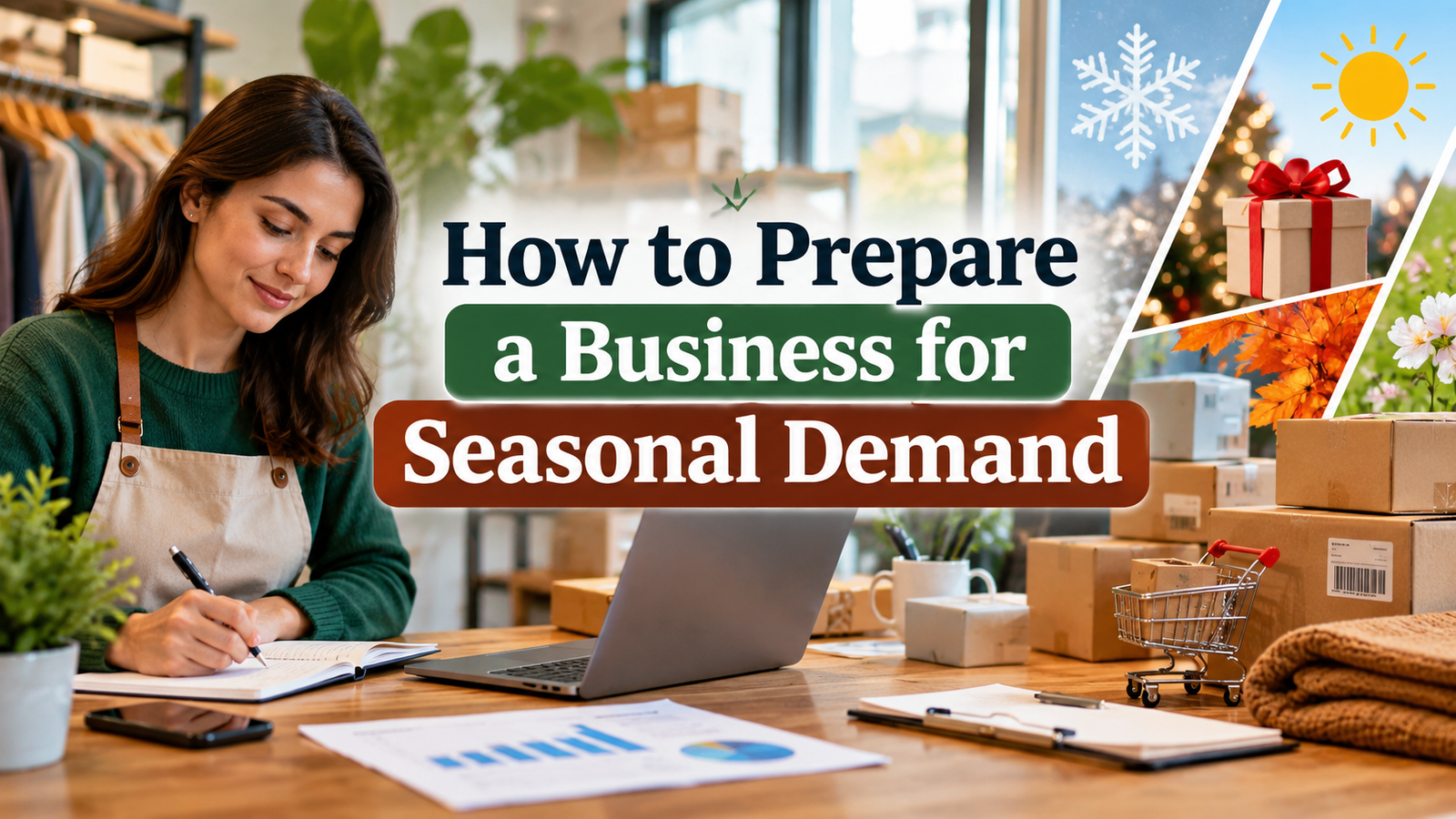
Seasonal demand can create both opportunities and problems for a small business. During certain times of the year, customer interest may increase quickly. A shop may become much busier before holidays. A clothing business may sell more during winter or summer. A food business may experience higher demand during festivals, weekends, school holidays, or special events.
For a business owner, this increase in demand can be exciting because it creates a chance to earn more revenue. However, it can also create pressure. If the business does not have enough stock, staff, cash, or delivery capacity, customers may become disappointed.
Preparing for seasonal demand is therefore an important part of business planning. Good preparation allows a business to serve more customers without losing control of quality, expenses, or daily operations.
Understand Your Seasonal Demand
The first step is to understand when demand normally increases.
Every business has a different pattern. Some businesses become busy during the summer. Others perform better during winter. Some experience strong sales before major holidays, while others depend on school seasons, weddings, tourism periods, or local events.
Business owners should study their own sales records instead of making assumptions.
Look at previous months and compare sales. Try to identify periods where customer orders increased noticeably.
You can also study website traffic, customer inquiries, product demand, and social media activity.
For example, if your sales normally increase during November and December, those months should become an important part of your yearly planning.
Historical data is one of the most useful tools for preparing for seasonal demand.
Review Previous Seasonal Performance
Before planning for the next busy season, review what happened during the previous one.
Ask yourself several practical questions.
Which products sold the most?
Which products remained unsold?
Were there any stock shortages?
Did customers complain about delivery delays?
Did employees struggle with the workload?
Were certain marketing campaigns more successful than others?
This review can reveal many useful lessons.
For example, you may discover that one product sold much faster than expected while another product had very little demand.
You may also realize that your team became overwhelmed because there were not enough people available to handle customer service.
These observations can help you make better decisions next time.
Forecast Expected Sales
Sales forecasting means estimating how much you may sell during a future period.
A forecast does not need to be perfect. Its purpose is to give you a reasonable idea of what may happen.
Start by looking at sales from the same period last year.
Suppose your business sold 1,000 units during the previous holiday season. If your business has grown since then, you might expect higher demand this year.
You can also consider other factors such as market trends, customer growth, pricing changes, new products, and marketing activity.
Avoid making overly optimistic forecasts.
It is usually safer to create a realistic estimate and prepare for different situations.
You can make three basic forecasts.
One for lower demand.
One for normal demand.
One for higher demand.
This approach makes business planning more flexible.
Prepare Inventory Early
Inventory management becomes especially important during periods of seasonal demand.
Running out of popular products can cause lost sales and disappointed customers.
However, purchasing too much stock can also create problems because unsold products may remain after the season ends.
The goal is to find a reasonable balance.
Start ordering important products early, especially if your suppliers require long delivery times.
Identify your best selling items and make sure you have enough stock available.
You should also separate essential products from optional products.
Essential products are the items customers are most likely to buy.
Optional products may have less predictable demand.
It usually makes sense to keep more stock of reliable best sellers and smaller quantities of uncertain products.
Communicate With Suppliers
Strong communication with suppliers is important when preparing a business for seasonal demand.
Suppliers may also become busy during the same period.
If many businesses place orders at the same time, deliveries may take longer.
Contact your suppliers before the busy season begins.
Ask them about expected delivery times, product availability, minimum order quantities, and possible supply problems.
You should also find out whether prices may change during the season.
Good communication helps you avoid unexpected problems.
If possible, identify backup suppliers for important products.
Depending completely on one supplier can be risky during a busy period.
A backup supplier may help if your main supplier experiences delays or stock shortages.
Plan Your Cash Flow
Seasonal demand often requires businesses to spend money before earning additional revenue.
You may need to buy more inventory, hire temporary workers, increase marketing, purchase packaging materials, or pay for additional delivery services.
These expenses usually occur before the seasonal sales arrive.
That is why cash flow planning is important.
Estimate how much money you will need before the season begins.
Create a list of expected expenses and compare it with your available cash.
Avoid spending too much based only on expected future sales.
Unexpected changes can happen.
Demand may be lower than predicted, or customers may pay later than expected.
Keeping some cash available for unexpected costs can make the business more financially stable.
Prepare Your Team
Employees play an important role during busy periods.
If customer demand increases suddenly, your regular team may struggle to handle the extra workload.
Before the season begins, discuss your expectations with your employees.
Explain which products or services may become more popular and how daily responsibilities may change.
You may also need temporary or part time workers.
Hiring early gives you enough time to train new employees properly.
Training should include customer service, product knowledge, payment procedures, inventory handling, and safety requirements.
A trained team is more likely to work efficiently during busy periods.
Improve Your Business Processes
Seasonal demand can expose weaknesses in business processes.
A system that works well with ten orders per day may become difficult to manage with one hundred orders.
Review important processes before the busy period begins.
Look at order processing, inventory updates, customer inquiries, packaging, shipping, payments, returns, and complaints.
Try to simplify unnecessary steps.
For example, creating standard responses for common customer questions may save your team time.
Using simple inventory management software can reduce mistakes.
Clear responsibilities can also prevent confusion among employees.
The easier your processes are, the easier it becomes to handle increased demand.
Prepare Your Website and Online Store
If customers order through your website, your online systems should also be ready.
Check whether product information is accurate.
Update prices, stock levels, delivery information, and return policies.
Make sure customers can easily find your most important seasonal products.
Test your website on both desktop computers and mobile phones.
Many customers now shop from smartphones, so mobile usability is extremely important.
You should also make sure your payment system works correctly.
A customer who experiences payment problems may simply leave and buy from another business.
Plan Marketing Before the Season
Marketing should usually begin before seasonal demand reaches its highest point.
Customers often research products and compare options before making a purchase.
If your marketing starts too late, competitors may reach those customers first.
Create a simple seasonal marketing plan.
Decide which products you want to promote.
Choose your main marketing channels.
These may include social media, email, search engines, local advertising, or your business website.
Focus on providing useful information instead of creating constant sales pressure.
Customers may respond better when they understand how a product or service can solve a problem or meet a seasonal need.
Avoid Offering Too Many Discounts
Many businesses use discounts during busy seasons, but excessive discounting can reduce profit.
Customers may also begin waiting for discounts instead of purchasing at normal prices.
Before offering a promotion, calculate your costs carefully.
Understand how much profit remains after the discount.
Sometimes other offers can be more effective.
For example, you may offer free delivery, product bundles, loyalty rewards, or small gifts.
These options can create value without reducing prices too aggressively.
Prepare Customer Service
Customer questions usually increase when sales increase.
People may ask about stock, delivery times, product details, returns, or payment methods.
Prepare answers to common questions before the busy season.
Make important information easy to find on your website.
Employees should also know where to find accurate information quickly.
Fast and helpful customer service can improve customer satisfaction.
It can also reduce the number of complaints your business receives during stressful periods.
Set Realistic Delivery Expectations
One of the most common problems during seasonal demand is delayed delivery.
Businesses may receive more orders than they can process.
Courier companies may also become busier.
Be realistic about delivery times.
Do not promise customers extremely fast delivery unless you are confident that you can provide it.
Clear communication is usually better than unrealistic promises.
If delivery may take longer during the season, mention this clearly before customers complete their purchase.
Customers are often more understanding when they know what to expect.
Create a Backup Plan
Even good business plans can face unexpected problems.
A supplier may fail to deliver.
An employee may become unavailable.
A popular product may sell faster than expected.
A delivery company may experience delays.
Prepare backup options for important parts of your business.
Identify alternative suppliers.
Train more than one employee for important tasks.
Keep emergency cash available.
Know which products you can promote if another product becomes unavailable.
A simple backup plan can reduce stress when something goes wrong.
Monitor Sales During the Season
Planning should continue even after the busy period begins.
Monitor sales regularly.
Compare actual demand with your forecast.
If a product is selling faster than expected, you may need to reorder quickly.
If another product is selling slowly, avoid purchasing unnecessary additional stock.
You should also monitor customer feedback.
Complaints and questions can reveal operational problems before they become serious.
Daily or weekly reviews can help you adjust your strategy while the season is still active.
Protect Product and Service Quality
Higher demand can sometimes cause businesses to focus only on speed.
However, quality should remain important.
Poor quality during a busy period can damage customer trust.
Customers may forgive a slightly longer waiting time more easily than a poor product or careless service.
Create simple quality checks.
Make sure products are packed correctly.
Check orders before shipping.
Review customer service standards with employees.
Long term business growth depends on satisfied customers, not only seasonal sales.
Plan for the Period After the Season
Seasonal planning should include what happens after demand decreases.
Many businesses experience a quiet period immediately after a busy season.
You may have leftover inventory, lower sales, or additional expenses.
Decide in advance how you will manage remaining stock.
Some products may be stored for the next season.
Others may be sold through a carefully planned clearance campaign.
You should also review your temporary staffing arrangements and marketing expenses.
Good post season planning can protect your profits.
Measure Your Results
After the season ends, review your performance.
Compare your actual sales with your forecast.
Calculate your revenue, expenses, and profit.
Review inventory levels and customer feedback.
Ask your employees what worked well and what created problems.
Write down the most important lessons.
These notes can become extremely valuable when you prepare for the next seasonal period.
Each year, your seasonal planning should become more accurate.
Keep Improving Your Seasonal Strategy
Seasonal demand is not exactly the same every year.
Customer behavior changes.
New competitors enter the market.
Technology develops.
Economic conditions may also influence spending.
Continue learning from your results.
Small improvements in forecasting, inventory management, staffing, and customer service can make a significant difference over time.
The goal is not to predict every detail perfectly.
The goal is to build a business that can respond calmly and efficiently when demand increases.
Conclusion
Learning how to prepare a business for seasonal demand can help business owners make better decisions during important sales periods.
Successful preparation usually begins several weeks or months before demand increases. It includes reviewing previous sales, forecasting demand, managing inventory, communicating with suppliers, planning cash flow, preparing employees, improving business processes, and setting realistic customer expectations.
Seasonal demand should not be treated only as an opportunity to sell more products. It should also be viewed as a test of how well the business can handle growth.
A business that prepares carefully can serve customers more effectively while protecting quality and profitability.
Most importantly, seasonal planning becomes easier with experience. By reviewing each season and recording what you learn, you can build a stronger and more organized business year after year.