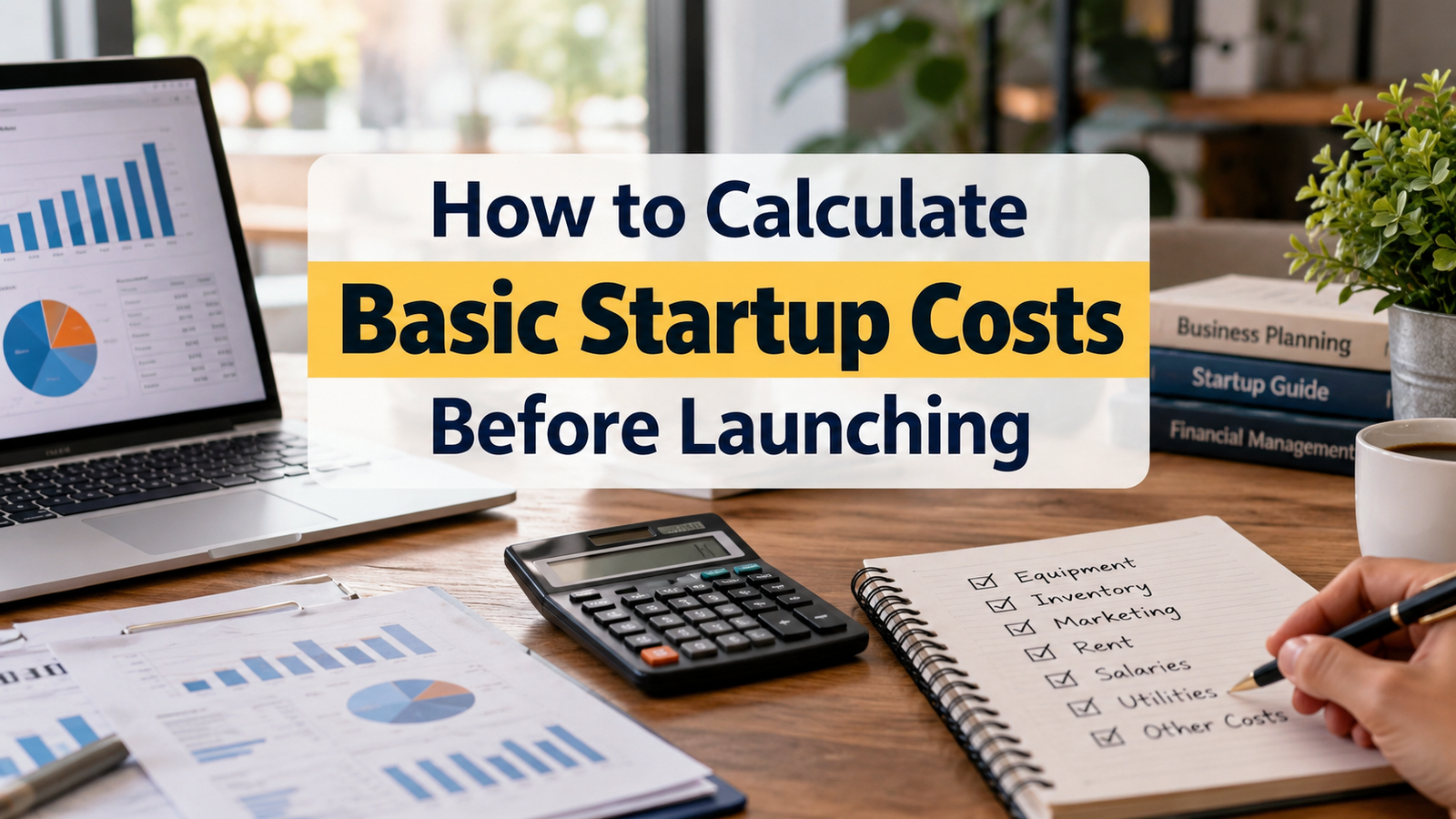
Starting a business can feel exciting because it gives you the chance to turn an idea into something real. However, before opening your doors, launching a website, or making your first sale, it is important to understand how much money your business may need.
Many new entrepreneurs focus mainly on the product or service they want to offer. They think about customers, branding, marketing, and future profits. These things are important, but startup costs also deserve careful attention.
Learning how to calculate basic startup costs before launching can help you avoid financial surprises. It gives you a clearer picture of what you can afford, how much money you may need, and where your biggest expenses are likely to appear.
Startup cost planning does not need to be complicated. You do not need to be an accountant to make a useful estimate. A simple list, realistic research, and careful calculation can give you a strong starting point.
What Are Startup Costs?
Startup costs are the expenses you may need to pay before your business begins operating normally.
These costs can include equipment, business registration, marketing, software, inventory, rent, packaging, professional services, and many other expenses.
Every business has different startup costs.
Someone starting an online consulting business may only need a computer, website, software, and marketing budget. A person opening a physical retail store may need rent, furniture, inventory, signs, equipment, licenses, and utility deposits.
This is why it is important to calculate startup costs based on your own business model instead of copying another company.
Start With a Simple Business Idea
Before calculating costs, clearly define what kind of business you want to launch.
Ask yourself what you will sell, how you will sell it, and how customers will receive it.
For example, imagine that you want to start a small online clothing business.
You may need to buy initial inventory, packaging materials, a domain name, website hosting, product photography, advertising, and delivery supplies.
If you want to open a physical clothing shop instead, you may also need rent, store furniture, electricity, signs, staff, and security.
Your business model directly affects your startup budget.
The clearer your business idea becomes, the easier it is to identify possible expenses.
Separate One Time Costs From Monthly Costs
One of the easiest ways to calculate startup costs is to divide expenses into two main groups.
The first group is one time costs.
These are expenses that you usually pay once before or during the early stage of the business.
Examples can include business registration fees, furniture, equipment, website development, logo design, initial inventory, tools, and store renovation.
The second group is ongoing costs.
These are expenses that may continue every week or month.
Examples include rent, internet, software subscriptions, employee salaries, advertising, utilities, insurance, and delivery expenses.
Separating these two categories makes your financial planning much easier.
You can see how much money you need to launch and how much you may need every month after launching.
List Your Essential Equipment
Equipment can become one of the biggest startup expenses, depending on the type of business.
Write down every important item you need to operate.
For a home based online business, you may need a laptop, mobile phone, printer, camera, desk, or storage shelves.
For a restaurant, equipment costs may include refrigerators, cooking equipment, tables, chairs, utensils, and storage systems.
For a construction or repair business, tools and safety equipment may represent a large part of the startup budget.
Do not automatically buy the most expensive equipment available.
Think about what you actually need during the first few months.
Sometimes used equipment or basic models can help reduce startup costs without affecting the quality of your work.
Calculate Initial Inventory Costs
If your business sells physical products, you may need to purchase inventory before you can start selling.
Inventory means the products or materials you keep available for customers.
Estimate how many products you realistically need at the beginning.
New business owners sometimes purchase too much inventory because they expect strong sales immediately. This can create cash flow problems because money becomes tied up in products that have not yet been sold.
A smaller starting inventory can sometimes be a safer approach.
You can increase stock when you begin understanding what customers actually want.
When calculating inventory costs, remember to include shipping, packaging, customs charges, storage, and other related expenses if they apply to your business.
Include Business Registration and Legal Costs
Depending on your location and business structure, you may need to pay registration or licensing fees.
These expenses are easy to forget because many entrepreneurs focus first on products and marketing.
Possible legal or administrative costs can include business registration, permits, professional licenses, contracts, accounting services, and professional advice.
Research the requirements that apply to your area and industry.
Some businesses may have very few registration expenses, while others may need several licenses before operating.
Including these costs in your startup budget helps prevent unexpected financial pressure later.
Estimate Website and Technology Expenses
Technology is an important part of modern business.
Even small local businesses often need some type of online presence.
Your technology expenses may include a domain name, web hosting, business email, website design, payment processing tools, accounting software, customer management software, and other digital services.
You may not need every tool immediately.
Start with the technology that directly supports your business operations.
For example, if customers mainly contact you through social media, you may begin with a simple website and expand it later.
If your business depends heavily on online sales, a reliable ecommerce website may need a larger part of your startup budget.
Calculate Marketing Costs
A business cannot grow if potential customers do not know that it exists.
Marketing should therefore be included in your startup cost estimate.
Marketing expenses can include social media advertising, printed flyers, business cards, photography, video content, website content, local advertising, and promotional materials.
The amount you need depends on your marketing strategy.
A small local service business may rely heavily on referrals and local social media groups. An online store may need a larger advertising budget to attract customers.
You do not have to spend a large amount of money immediately.
Start small, measure the results, and increase spending on marketing methods that actually produce customers.
Consider Rent and Workspace Costs
Your workspace can greatly affect startup costs.
Some businesses can operate from home, while others need an office, shop, warehouse, workshop, or commercial location.
If you need physical space, calculate more than just the monthly rent.
You may also need to pay a security deposit, advance rent, electricity deposit, furniture, cleaning, maintenance, internet installation, and signs.
These expenses can increase your startup budget quickly.
Before renting a large space, think carefully about what your business truly needs.
A smaller space may allow you to reduce financial risk while your business is still developing.
Include Employee Costs
Some businesses can be started by one person, while others need employees from the beginning.
If you plan to hire staff, calculate the full cost of employment.
Salary is only one part of employee expenses.
Depending on your location and business, there may also be training costs, uniforms, equipment, insurance, taxes, or other employee related expenses.
Be realistic about how many people you need.
Hiring too many employees before sales become stable can place heavy pressure on a new business.
Many startups begin with a small team and add employees as demand increases.
Add Packaging and Delivery Expenses
Packaging and delivery costs can easily be overlooked.
If you sell physical products, calculate the cost of boxes, bags, labels, tape, protective materials, printing, and shipping.
Even small packaging expenses become important when multiplied across many orders.
You should also research delivery charges.
If customers pay for delivery separately, decide how this will be calculated. If you plan to offer free delivery, include the shipping cost inside your pricing or marketing budget.
Understanding these expenses helps you price products more accurately.
Estimate Monthly Operating Expenses
After calculating the expenses required to open your business, estimate how much money you may need to keep it operating.
Common monthly expenses can include rent, electricity, internet, software, marketing, fuel, salaries, supplies, accounting, phone bills, and maintenance.
Add these costs together to estimate your monthly operating expenses.
For example, suppose your monthly expenses are around $2,000.
If you want enough money to operate for three months before becoming profitable, you may want approximately $6,000 available for operating expenses.
This financial cushion can reduce pressure while you build your customer base.
Create a Startup Cost Spreadsheet
A simple spreadsheet can make startup planning much easier.
Create columns for the name of each expense, estimated cost, actual cost, payment date, and whether the expense is one time or recurring.
You can organize expenses into categories such as equipment, marketing, legal costs, inventory, technology, rent, packaging, and operating expenses.
The purpose of the spreadsheet is not to create perfect numbers.
Its purpose is to help you see the financial picture clearly.
Update the spreadsheet whenever you receive more accurate prices.
Over time, your budget will become more realistic.
Research Real Prices
One of the biggest mistakes in startup planning is guessing too much.
Instead of writing random estimates, research real prices.
Contact suppliers. Check equipment prices. Compare software plans. Ask about rent. Request shipping quotes. Research advertising costs.
The more real information you collect, the more useful your startup budget becomes.
You should still expect some prices to change, but researched estimates are much better than guesses.
Try to get two or three quotes for important expenses before making a final decision.
Add an Emergency Reserve
Unexpected expenses are common when starting a business.
Equipment may cost more than expected. Delivery prices may increase. You may need additional supplies. Marketing may require more money than originally planned.
This is why many business owners include an emergency reserve in their startup budget.
You might add around 10 percent or more to your estimated startup costs depending on the level of uncertainty in your business.
For example, if your estimated startup cost is $10,000, you may decide to keep another $1,000 or $1,500 available as a reserve.
This money can help you handle surprises without immediately borrowing.
Calculate Your Total Startup Cost
Once you have listed all expenses, the final calculation becomes simple.
Add your one time startup expenses first.
Then calculate the amount needed for your first few months of operating expenses.
Finally, add your emergency reserve.
Suppose your estimated costs look like this:
Equipment costs $2,000.
Initial inventory costs $3,000.
Business registration costs $300.
Website and technology costs $500.
Marketing costs $700.
Packaging and other expenses cost $500.
Your initial startup expenses would total $7,000.
Now imagine that your monthly operating expenses are $1,500 and you want three months of operating funds.
That adds another $4,500.
If you also keep a $1,000 emergency reserve, your total estimated startup requirement becomes $12,500.
This example shows why looking only at equipment or inventory costs can give you an incomplete picture.
Look for Costs You Can Reduce
After calculating your first budget, review each expense carefully.
Ask whether every item is necessary before launching.
Maybe you can work from home instead of renting an office.
Maybe you can buy used equipment.
Maybe you can begin with a smaller inventory.
Maybe you can create simple marketing content yourself instead of hiring an expensive agency.
Reducing unnecessary costs can make your business easier to launch.
However, avoid cutting expenses that directly affect product quality, customer safety, or important business operations.
The goal is not to spend as little as possible.
The goal is to spend carefully.
Avoid Depending on Immediate Profit
A common startup mistake is assuming that the business will become profitable during the first month.
Some businesses grow quickly, but many need time to attract customers and build trust.
Your startup budget should not depend entirely on immediate sales.
Try to estimate how long your business could operate if sales are slower than expected.
This can help you make better financial decisions and reduce stress during the early stage.
Review Your Budget Before Launching
Your startup cost calculation should not remain unchanged.
Review it before making major financial commitments.
Prices may change. Your business model may change. You may discover new expenses or remove unnecessary ones.
Reviewing your budget gives you an opportunity to improve your plan before spending money.
It can also help you decide whether you are financially ready to launch or whether you should save more money first.
Final Thoughts
Understanding how to calculate basic startup costs before launching is an important step for anyone planning a new business.
Start by clearly defining your business model. List one time expenses and ongoing costs separately. Include equipment, inventory, marketing, technology, legal costs, rent, packaging, employees, and monthly operating expenses.
Research real prices instead of relying only on guesses.
Then add an emergency reserve and calculate how much money you may need to operate during the first few months.
Your estimate does not need to be perfect.
The goal is to understand where your money will go and whether your business idea is financially realistic.
A carefully prepared startup budget can help you avoid unnecessary spending, reduce financial stress, and make better decisions before launching.
When you understand your basic startup costs, you can move forward with greater confidence and focus more energy on building a business that can grow over time.